Team-building games for children
The choice of team-building games for children is crucial for many reasons. The main one is that children are a very target group, so the games prepared for them need to be very interesting. When looking for game ideas, you should also pay attention to the objective you want to accomplish. Team-building games should not only integrate the group (as the name may suggest) but also develop additional skills – teach about respect for your opponents, communication, or cooperation. The games that we would like to present will be perfect for children at the age of 3 and older – at kindergarten, at school, or during a trip.
You should definitely check out our entry on
outdoor team-building games for children – nothing will help children integrate better than outdoor activity
WHEN SHOULD YOU RELY ON TEAM-BUILDING GAMES?
Team-building games are a perfect solution in situations when the child finds themselves in a new, unknown environment. Because children love physical activity, such is usually the nature of games (that is why we have prepared a list of the best
physical games and activities for children of all ages)
Team-building games form a crucial element, especially at the beginning of September, when new children arrive at schools and kindergartens! At the beginning of the year, new members will show up in the class / group. It is important that children must know each other’s names, overcome shyness and learn something about their peers. It is a win-win situation! Kids will feel better while the teachers will have the first opportunity to observe the behavior of their new pupils. Use team-building games to nullify the stress connected with joining a new group and to create a friendly atmosphere
HOW TO CHOOSE THE CORRECT TEAM-BUILDING GAMES FOR CHILDREN?
Everything depends on the size of the group and children’s age. Let us assume that you are interested in team-building games for children at your kindergarten or, as a teacher, you are looking for games for children from your class.
WORD GAMES:
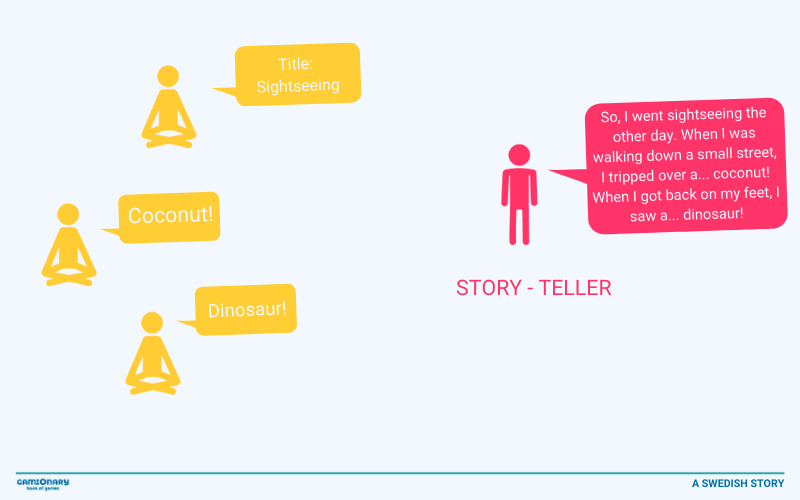
A Swedish story
Rules:
- Choose one person who will be the story-teller. The story-teller’s task is to tell a story.
- Other participants choose the most important elements of the story: the time, place and topic.
- The story-teller starts telling their story. During the storytelling, participants shout random words that the story-teller must use in the story.
- The more those words are “unrelated” to the story, the better
READ THE FULL DESCRIPTION OF THE GAME
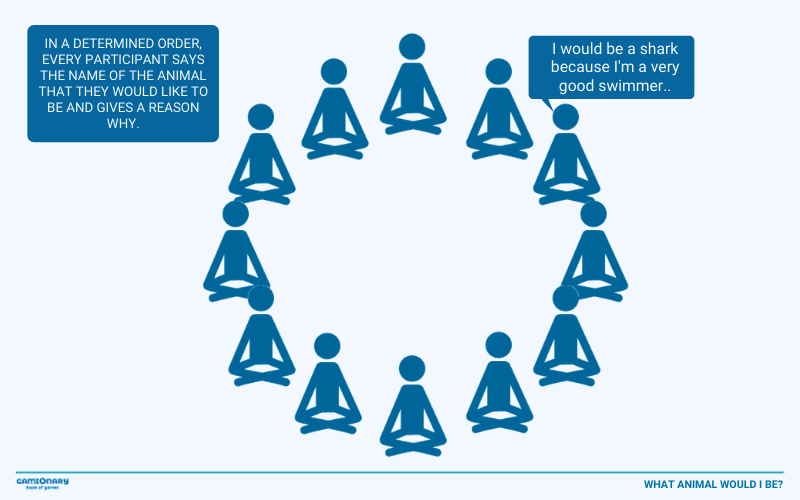
What animal would I be?
Rules:
- Participants sit down in a circle. The selected person starts:
- Each participant must tell what animal they would be and why.
- The animals can repeat.
READ THE FULL DESCRIPTION OF THE GAME
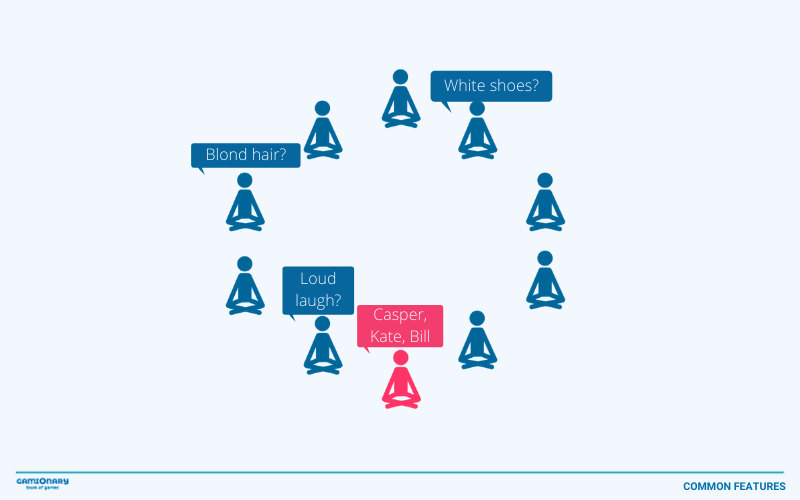
Common features
Rules:
- Participants sit comfortably in a circle.
- The first person must find common features such as personality, appearance or interests for e.g., 3 people who also participate in the game. That person must tell their names.
- Other participants must guess the common feature.
- Participants take turns.
- They must remember that the game has a pretty casual form and almost anything can be a common feature.
READ THE FULL DESCRIPTION OF THE GAME
PHYSICAL GAMES:
Sticky popcorn

Rules:
- On the teacher’s signal: “Let’s make popcorn”, participants start hopping and form pairs, then threes, and so on, until they altogether form one mass of sticky popcorn.
- Throughout the whole game, participants must keep hopping.
READ THE FULL DESCRIPTION OF THE GAME
An atmospheric greeting
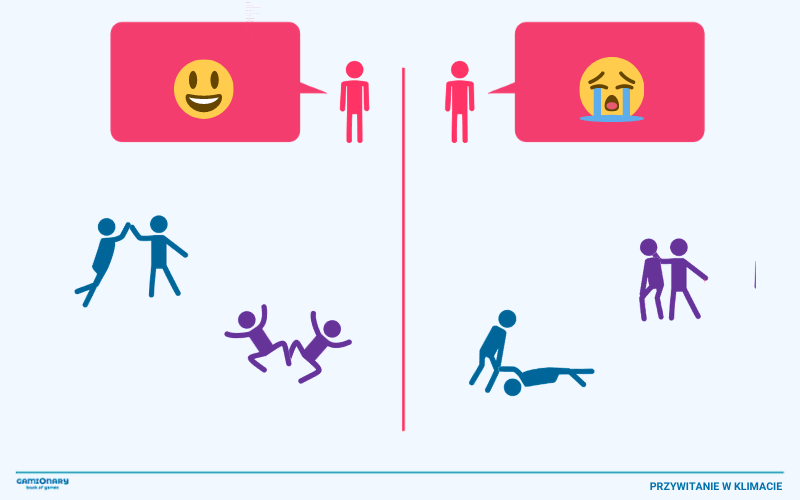
Rules:
- In pairs, each participant has to greet the other. However, the greeting must reflect the emotion or situation selected by the game leader, for instance: “you have not seen each other for years” or “you must reflect sadness”, or “you must act as cartoon characters”.
READ THE FULL DESCRIPTION OF THE GAME
A master to a master
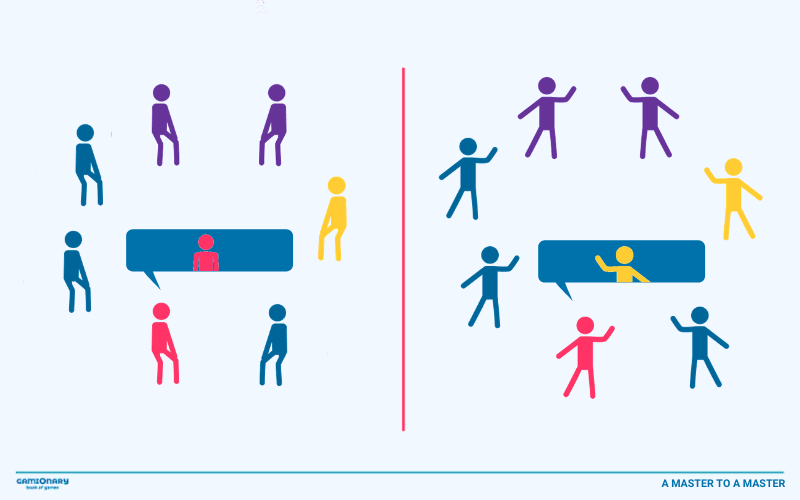
Rules:
- All participants do the following set of moves in the same rhythm (on four): pat on the knees with palms, clap hands, snap the fingers, pause
- When patting on their knees with palms, the Master is to say their name; when clapping their hands, he or she says “to”; when snapping the fingers, they say the name of the person they pass the game to. The new person repeats the set of moves: first, they say their name (1), then say (2) “to”, and then say the name of the person that they choose to be next (3).
- A person who makes a mistake is out of the game. There is also another variant of this game where the goal is to replace the master, i.e. participants take turns clockwise; if the master makes a mistake, the new master will be the person sitting to their left. Everyone who makes a mistake goes to the end of the line and sits on the master’s right side – the whole line slowly moves forward.
- One may call their own name, either to just catch a breath or baffle other participants.
- It is important that the names must not repeat. If that is the case, the participants should determine how individual participants will be referred to.
READ THE FULL DESCRIPTION OF THE GAME
Sculptors
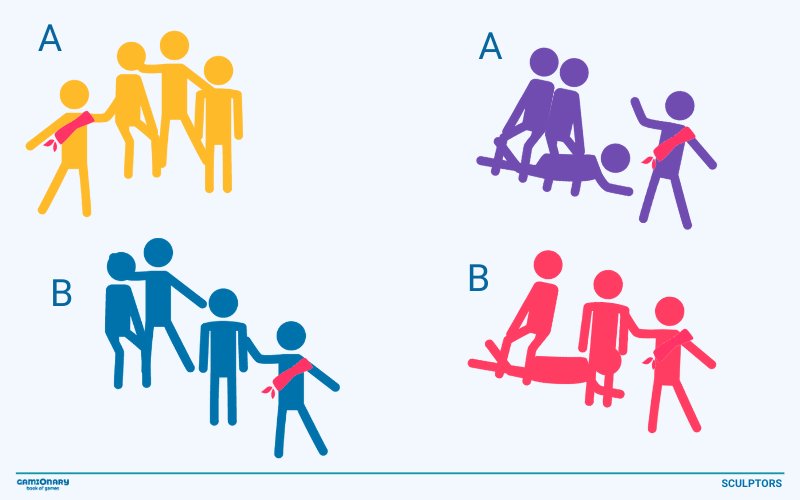
Rules:
- Divide children into teams. The number of teams must be an even number.
- Ask teams to form pairs: one team will be team A and the other: team B.
- In each team, choose one person to be the sculptor.
- The sculptors use the bodies of their teammates to create a work of art.
- The sculptor from team A creates a sculpture while the sculpture from team B must recreate the same sculpture.
- Later on they swap roles: the sculptor from team B is the first to create a sculpture and the sculptor from team B must recreate it.
READ THE FULL DESCRIPTION OF THE GAME
Make me laugh
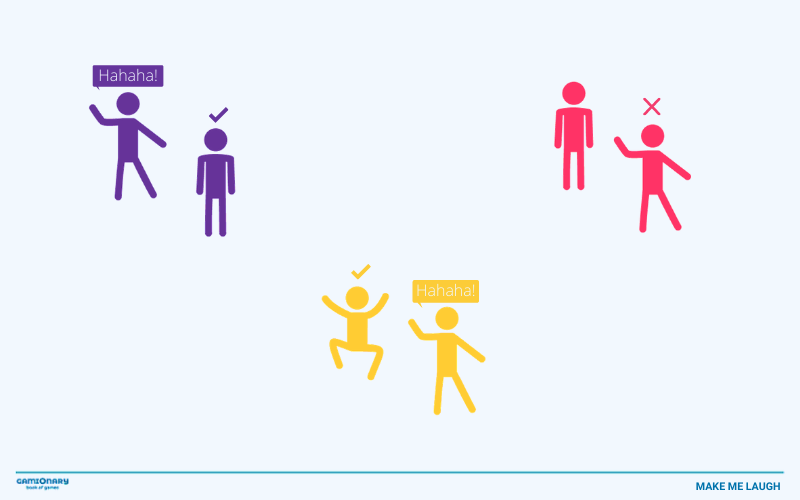
Rules:
- People in pairs stand opposite to each other.
- One person from the pair must crack the other person up within a set time limit.
- It is very important that participants cannot touch each other, so tickling or pushing the partner is forbidden.
READ THE FULL DESCRIPTION OF THE GAME
PEN AND PAPER TEAM-BUILDING GAMES FOR CHILDREN
Sometimes, you do not need much to organize a great team-building game. The children are sitting in the class? Wonderful! Each of them has a pen and a piece of paper.
Wandering image
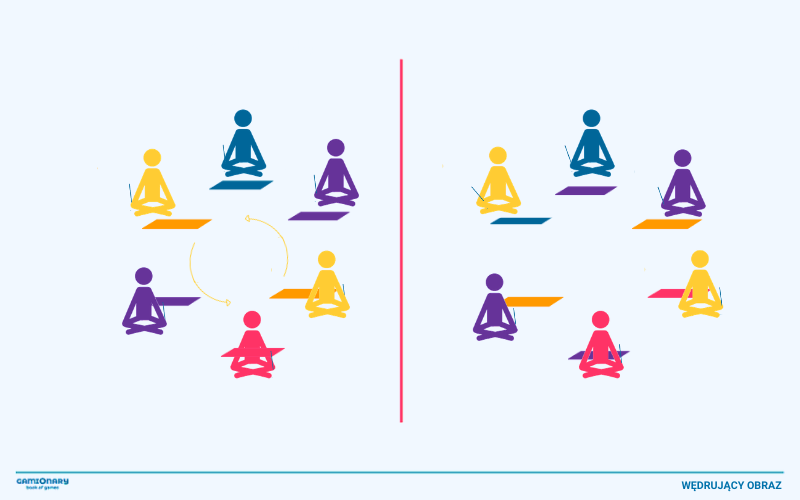
Game rules:
- On signal, each participant tries to create a drawing with any composition. It can be an object, a phenomenon, or a situation (participants have complete freedom).
- On another signal, everybody passes their piece of paper to the right. Participants continue drawing on their new pieces of paper, in a way they find fitting. They should stick to their original plan in order to make the work of art more interesting.
- The game ends when the drawings are ready and the piece of paper do a full circle. Each participant may check how their drawing changed and whether it matches their intended composition.
READ THE FULL DESCRIPTION OF THE GAME
One-sentence pictionary
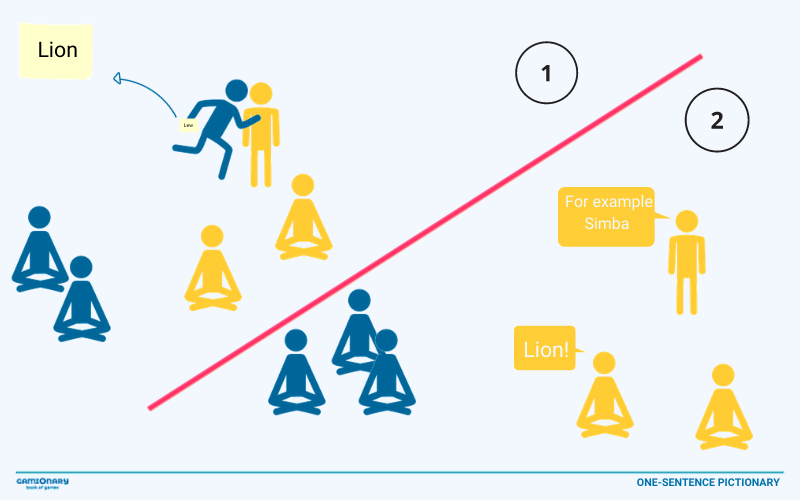
Game rules:
- Prepare several key words and write them down on pieces of paper.
- Divide players into teams. One person stands in front of the rest and reads the key word in silence. He/She has a moment to think.
- Next, he or she must explain the secret word in one sentence, so that their team can guess the word. IMPORTANT! He or she has only one chance.
- The team has 30 seconds to guess the key word. They can try guessing it multiple times.
READ THE FULL DESCRIPTION OF THE GAME
Find a partner
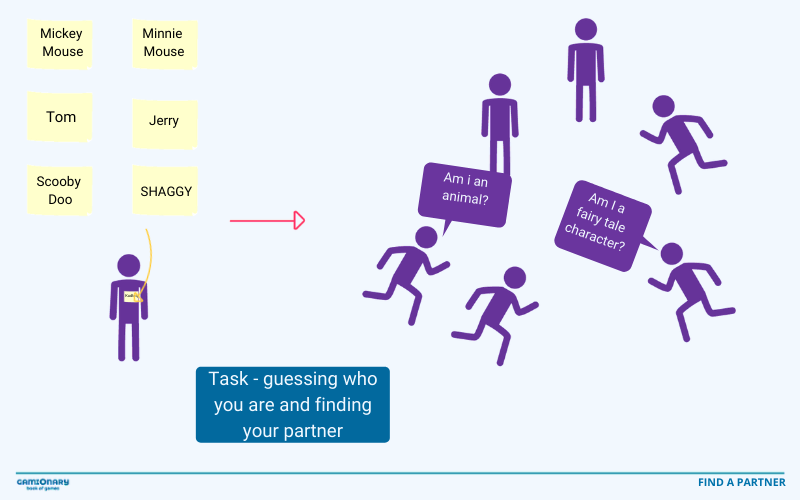
Game rules:
- On pieces of paper, prepare names of famous pairs e.g., Tom and Jerry, Sherlock Holmes and Watson, etc.
- Stick the card with the name of partner on each participant’s back.
- On signal, participants scatter and start asking other players questions that can only be answered with “yes” or “no”.
- When a participant manages to guess who they are, they start looking for their partner. In other words, the person who discovered that they are Sherlock Holmes starts looking for Watson.
READ THE FULL DESCRIPTION OF THE GAME
Drawing on demand
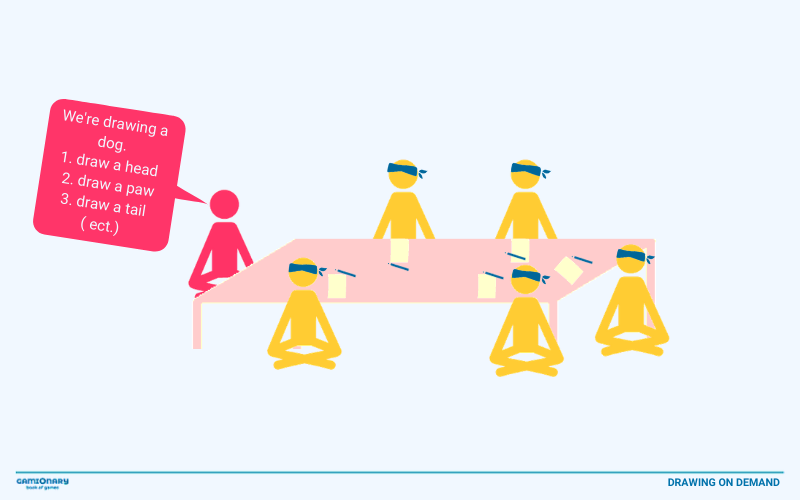
Game rules:
- Participants sit by the table with a pen and a piece of paper in front of them.
- Everybody is blindfolded except for the game leader.
- The game leader says what everybody will be expected to draw e.g., a puppy.
- The game leader tells everyone what they will need to draw. So, he or she says: “draw the head” and waits until everybody finishes drawing it. Next, he or she says the next sentence: “draw the back leg”, “draw the tail”, etc.
- When the drawings are finished, everyone takes off their blindfolds to look at their drawing.
READ THE FULL DESCRIPTION OF THE GAME
Merry Notes
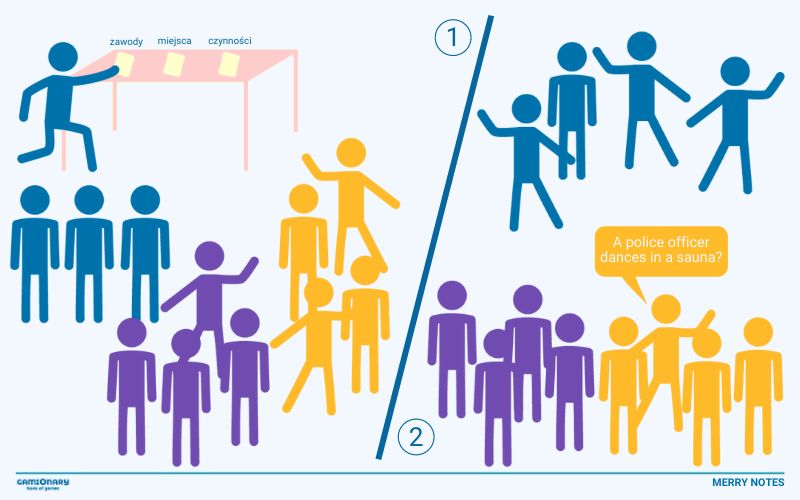
Game rules:
- Prepare three piles of papers and put them on a table. The first pile should contain pieces of paper with names of professions written on them, e.g. a farmer, a baker, a carpenter, a police officer, a gardener, etc. The second one: names of places, while the third: names of activities e.g., run, jump, celebrate.
- Each team draws one piece of paper from each pile. This way, they eventually get a sentence e.g., Gardener sings in space.
- Teams have several minutes to prepare a play based on the formed sentence.
- Just like in the game of pictionary, the whole team presents the sentence without using words. Other teams try to guess it.
READ THE FULL DESCRIPTION OF THE GAME
TEAM-BUILDING GAMES WITH A BALL
Below, we have described team-building games for children that you can play with a ball. There’s a plenty of ideas for games that use balls, but we focused on those that we find the easiest, so that every child will be able to play it.
Catch the ball
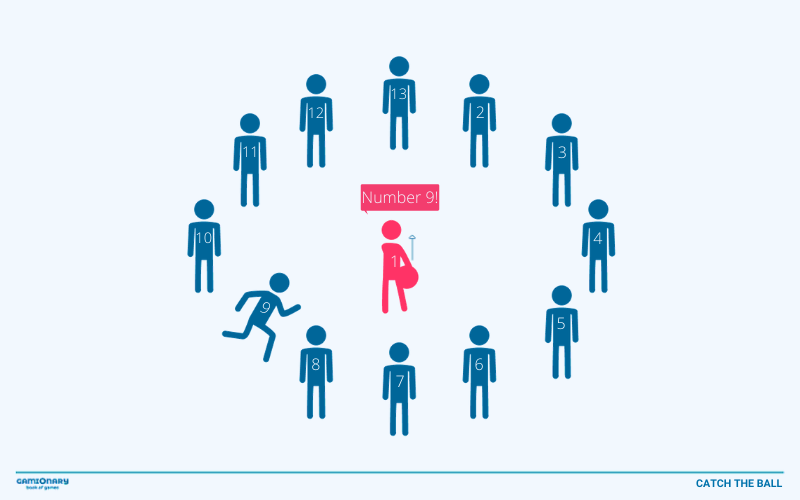
Game rules:
- The participants count themselves off, each of them is assigned a number.
- The first player enters the circle carrying a ball.
- He or she throws the ball in the air and says another player’s number.
- The selected player must enter the circle and catch the ball.
- Participants repeat this activity for a fixed period of time.
- If someone does not manage to catch the ball, he or she is given a penalty point.
READ THE FULL DESCRIPTION OF THE GAME
Get the ball
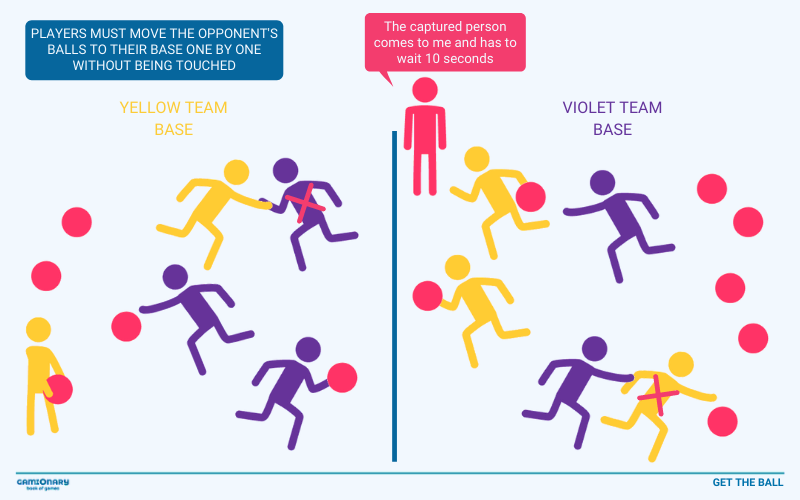
Game rules:
- The goal of the game is to put all the balls at the team’s base.
- Players must carry their opponents’ balls to their base one by one while avoiding being touched by the opponent.
- When a player has been touched, they go to the game leader and must wait 5-10 seconds, depending on the arranged rules.
- The game lasts until one of the teams collects all the balls or has the most balls after a set time limit.
READ THE FULL DESCRIPTION OF THE GAME
Cosmic balls
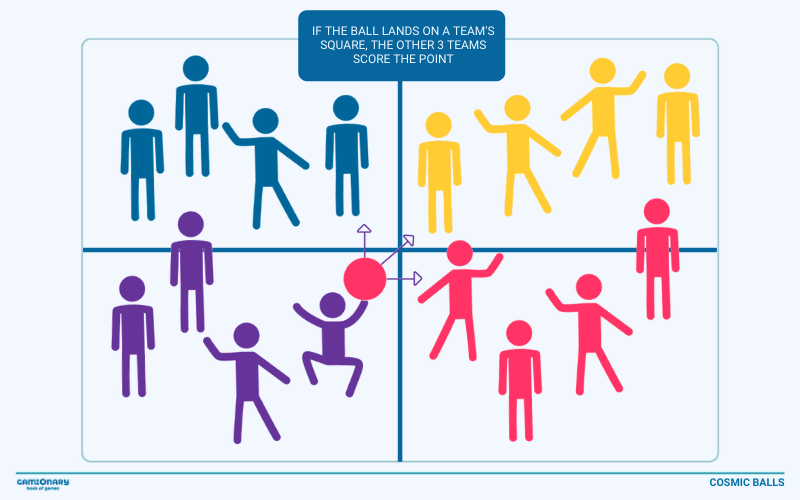
Game rules:
- The game leader tosses a beach ball to the play field.
- As part of a particular team, players must cooperate so that the ball will not touch their section.
- To do that, they can bounce the ball to make it pass over the height of the game leader standing in the middle to the opponents’ section.
- If the ball lands on the section of a team, other three teams score a point.
- The ball must not be caught; it can only be bounced from one player to another.
READ THE FULL DESCRIPTION OF THE GAME
Holey pipe
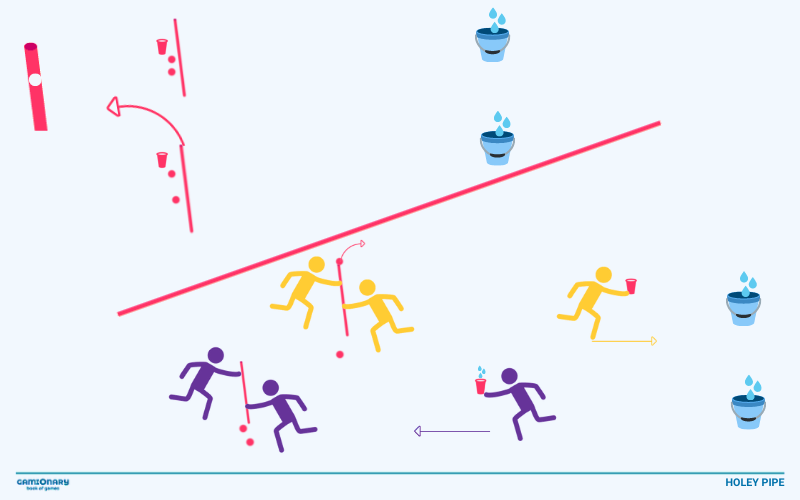
Game rules:
- In order to win, the team must cause the ping-pong ball to float to the top of the holey pipe by filling the pipe with water.
- The pipe has some holes drilled in it, so the participants must seal them as there is more water in the pipe.
- Set a time limit to increase the pressure or do it as a race.
READ THE FULL DESCRIPTION OF THE GAME
These are only examples of the team-building games we recommend for children. You will find more team-building games with our
browser and on our
YouTube channel. There, you can choose anything you are interested in: the place of the game, the number of children in the group, their age or the equipment that you have at your disposal. As a result, you will find the perfect number of games depending on whether you work at kindergarten, school or in a soccer club.
Our browser is a perfect tool for every teacher who is interested in playing with any group of children. As you can see, we have prepared games that are slightly different from the standard formula such as “Children and names” or “Children sitting in a circle or standing in a circle”, or the classic “Children swap places”. Of course, you can use those games. Everything depends on your group.