According to some sources, almost 2 million people from Ukraine have already sought refuge in Poland. Most of them are mothers with children. The situation is particularly dire for the young ones whose safe childhood was suddenly destroyed.
Our country has become their safe haven and many Poles decided to help the Ukrainians. In this article, you will find some guidelines and propositions of team-building games that will help Ukrainian children adapt to the new environment. They can be both used by families who help refugees as well as by schools and kindergartens.
Important! The list below is just our subjective choice – it contains simple games for name memorization, group drawing and physical activities.
Our data base has over 1300 different games with available modifications. You can sort them, among others, by: number of children, age, available equipment and place, skills to develop. We guarantee that you will find a game that will meet your expectations. You will find all you need
in our Book of Games
List of team-building games for children from Ukraine:
- Namesture
- Group greetings
- Ratatum
- Who’s disappeared?
- What animal would I be?
- Paper with personality
- The Prop (+video)
- Body parts
- No-hands-cup challenge
- Group Hop!
- Pass the Hula Hoop
- Draw an elephant
- Folding floor
Important notes on helping Ukrainian children
First of all, one must remember that those children had to suddenly leave their family homes and ended up in a different country. Their world has been turned upside down. That is why they need empathy and acceptance.
Do not expect Ukrainian children to demonstrate energy and enthusiasm typical for youngsters. They are often full of concern and fear. It is then of crucial importance to properly choose team-building games – they will help those children get to know their peers but also become accustomed to the new situation and forget, at least temporarily, about the most recent events.
Before starting the integration, make sure that the child learned about his or her surroundings and the place he or she is currently at. It will help them feel safe.
What is more, apart from organizing games for children from Ukraine, you should also inform the parents about local initiatives. Many communes organize various events for refugees, particularly for children. Participation will help them accept the new reality, especially when there are more refugees at such meetings, so it is possible to meet with fellow countrymen and people speaking in the same language. For such occasions, we recommend
physical games for children that we prepared some time ago – for children at kindergarten and school age
Which team-building games are good for children from Ukraine?
When it comes to games, the language barrier is the biggest obstacle. That is why it is recommended to rely on team-building games and activities that are based on communication through gestures and pictures. As a result, it will not only allow overcoming the language barrier, but also inspire creativity.
At the same time, it would be very advisable to have a person who speaks both Ukrainian and Polish. This will help communicate in difficult situations e.g. in case of a conflict or to describe the game rules to everyone. You may also use translator aids e.g., in your smart phone.
You also need to choose proper theme of the games and activities. It is recommended to avoid, for example, games with motifs of war or based on strong competition. Start with team-building games that will help participants get to know each other. Then, you may add games with elements of cooperation as well as deliberate realization – match them with the mood of the group.
- Namesture
 Preparation
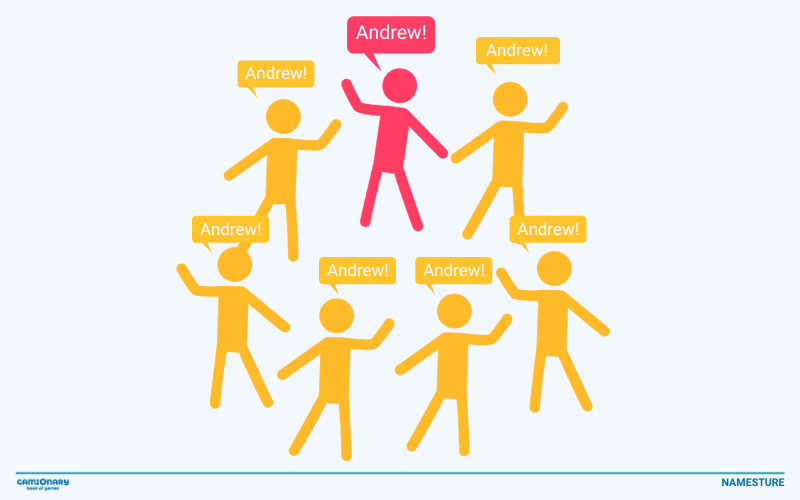
- Ask participants to stand in a circle.
Game rules
- The first player says their name and shows a gesture they came up with, the rest of the group must repeat it.
- The next player says the name of the previous person, shows their gesture and then says their own name and shows their own gesture, etc.
Goal
- To repeat names and gestures.
Full description and modifications available here: Namesture
- Group greetings
 Preparation
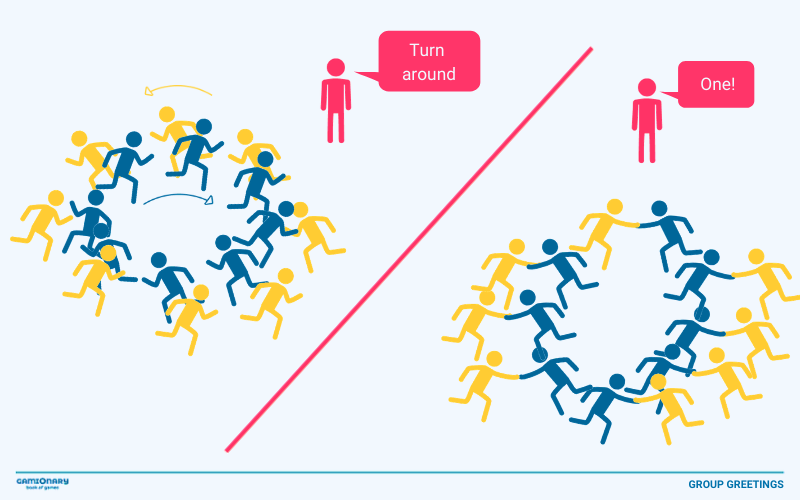
- Divide participants into pairs by asking them to stand in two circles, one inside of the other.
Game rules
- The game leader explains a code consisting of numbers that stand for a specific greeting. For example: “one: shaking one’s hand, two: warm hug, three: official greeting with a head nod”.
- When the game leader says: “turn around”, people from the inner circle start going right while people from the outer circle go left.
- When the game leader gives a number, participants stop and greet the person in front of them according to the given number.
- The goal of the game is to get to know each other and integrate.
- After several rounds, you can change the greeting methods.
Goal
- To greet somebody in a specific way
Full description and modifications available here: Group greetings
- Ratatum
 Preparation
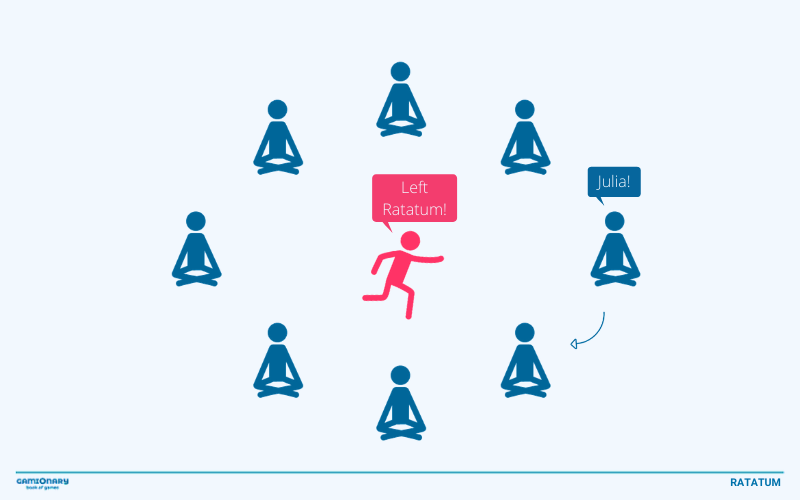
- Ask the participants to sit down in a circle.
- One person must stay in the middle of the circle.
Game rules
- Participants introduce themselves with their names and try to remember the name of the people standing to their left and right.
- The person sitting in the middle points at any person in the circle and says either: to the right ratatatum or: to the left ratatatum.
- The selected person must say the name of their neighbor on the said side before the person in the middle says “ratatatum”.
- If he or she fails to do it, they enter the circle; if they manage to say it on time, the first person goes on with the game.
- The game should be played at a fast pace. It is a good option for participants who have just met.
Goal
- To say the name of people sitting next to you as fast as possible.
Full description and modifications available here: Ratatum
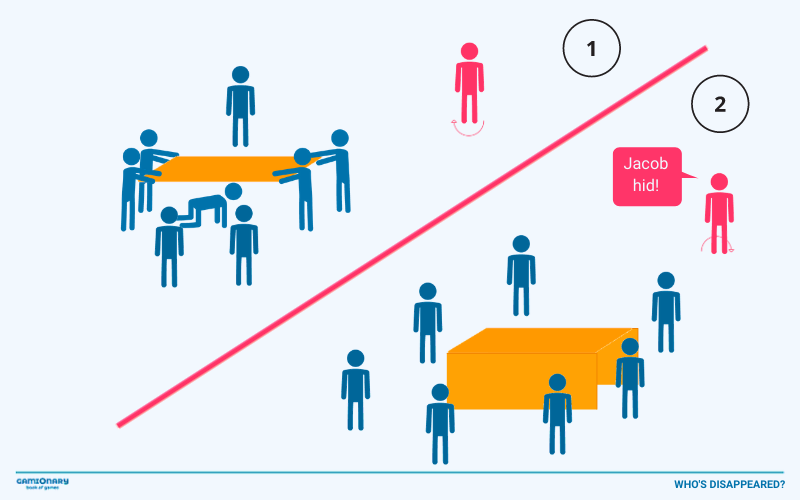
- Who’s disappeared?
 Preparation
- Choose one person who must stand with their back turned towards the rest of the group.
- The rest of the participants stands in the circle and holds a blanket or a bed sheet.
Game rules
- One person hides under the blanket.
- On signal, the person with their back turned turns around and must guess who is missing.
- There should be a time limit for the answer e.g., 5 seconds.
Goal
Full description and modifications available here: Who’s disappeared?
- What animal would I be?
 Preparation
Game rules
Preparation
Game rules
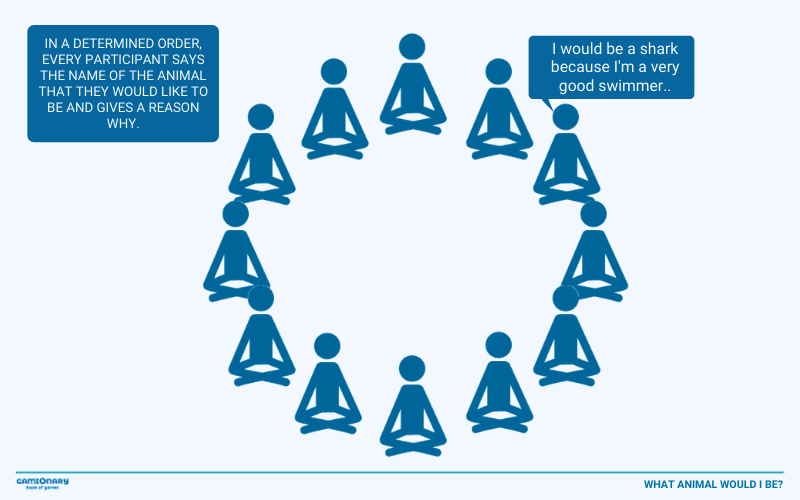
- In a determined order, every participant says the name of the animal that they would like to be and gives a reason why. The reason can be justified in several sentences.
- The animals can repeat.
Goal
- To stimulate imagination.
Full description and modifications available here: What animal would I be?
- Paper with personality
 Preparation
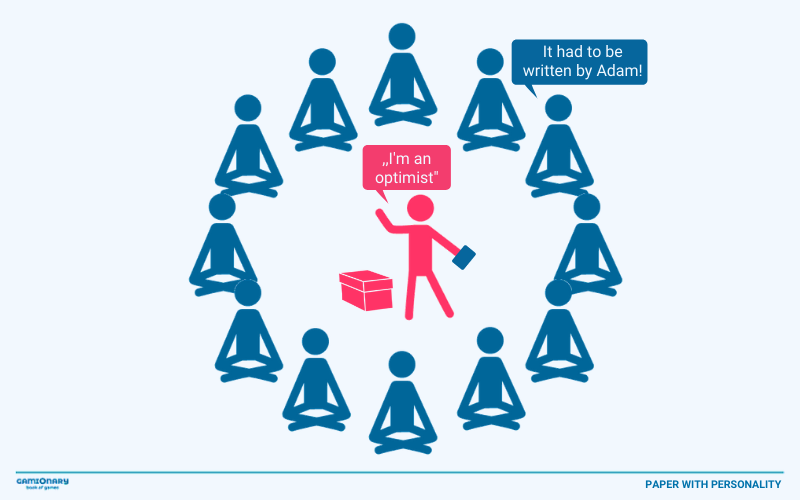
- The participants write down one of their characteristics on a piece of paper. It can be a personality trait, something about their appearance or hobbies.
- Next, all pieces of paper are gathered in one place.
Game rules
- Participants have 2 minutes to get to know each other.
- After two minutes, the game leader picks a piece of paper at random and reads it out loud. The participants’ goal is to guess to whom the piece of paper belongs.
- The person who knows the answer raises their hand. If he or she is correct, he or she gets a point.
- The person whose piece of paper has been selected does not participate in the guessing.
Goal
- To guess to whom does the piece of paper belong.
Full description and modifications available here: Paper with personality
- The Prop
By the way, visit our YouTube channel where we upload the most interesting games in form of videos:
Gamionary channel on YT
Preparation
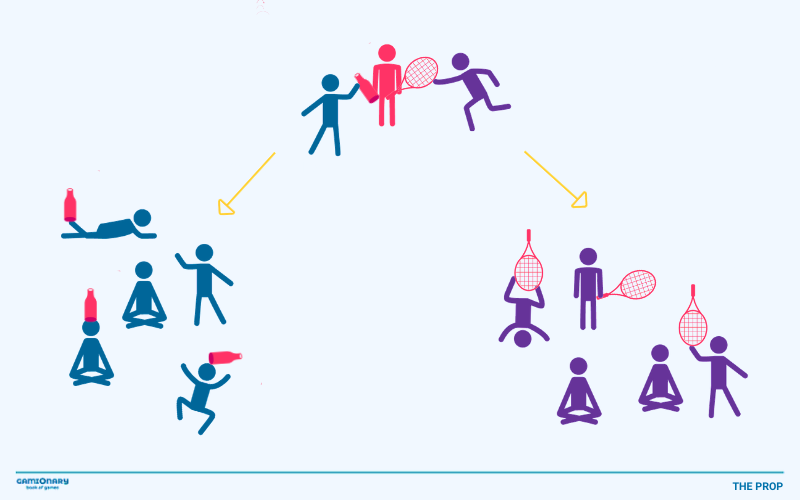
- Divide participants into groups.
- Give one unusual item to each group.
Game rules
- Each group received one unusual prop.
- Their task is to come up with as many applications for the item as possible and present them.
Goal
- The group that has found the highest number of applications wins.
Full description and modifications available here: The Prop
- Body parts
 Preparation
Game rules
Preparation
Game rules
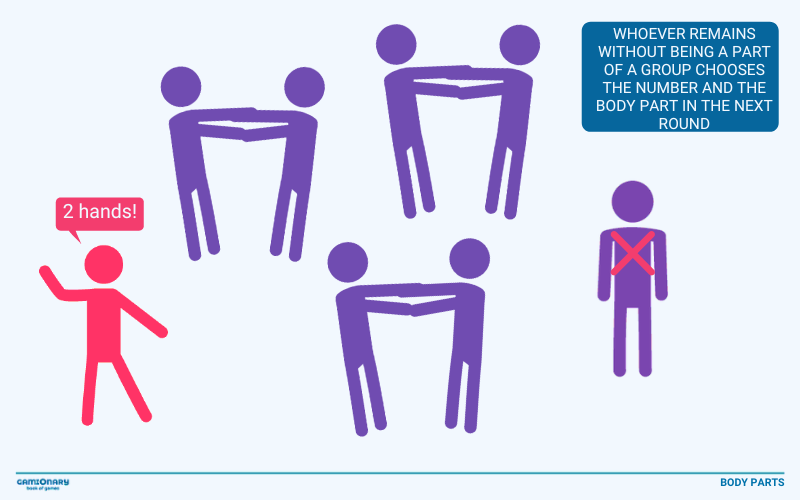
- Players move around the room until the game leader says out loud a number and a body part – e.g. four knees!
- Then, players must create groups of four people with the nearest participants by joining their body parts together – in this case, knees.
- Whoever remains without being a part of a group chooses the number and the body part in the next round.
Goal
Full description and modifications available here: Body parts
- No-hands-cup challenge
 Preparation
- Divide participants into teams.
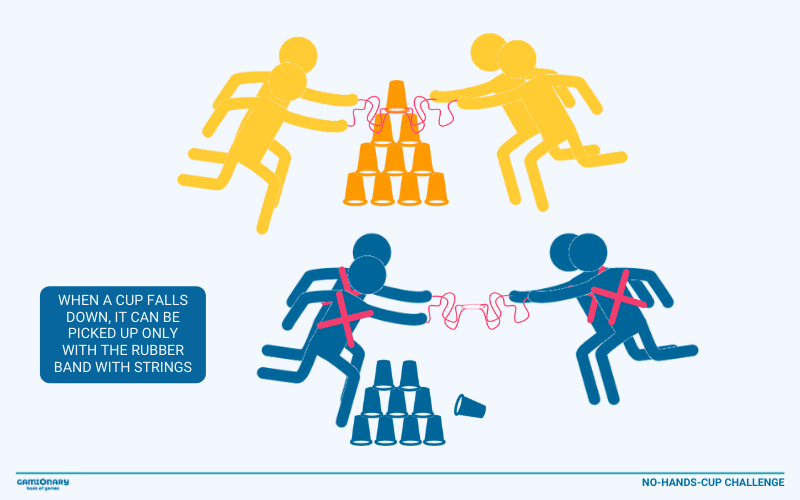
- Prepare a small rubber band for each team. Tie as many strings to the rubber band as there are players in the team.
- Prepare 10 cups per team.
Game rules
- Each person from the group holds onto one string tied to the band. As a group, they must use the band to raise the cups and stack them to form a pyramid.
- When a cup falls down, it can be picked up only with the rubber band with strings.
- The game lasts until the task is fully completed, e.g. a pyramid of 10 cups is built.
Goal
Full description and modifications available here: No-hands-cup challenge
- Group Hop!
 Preparation
- Divide players into groups of 4-6 people.
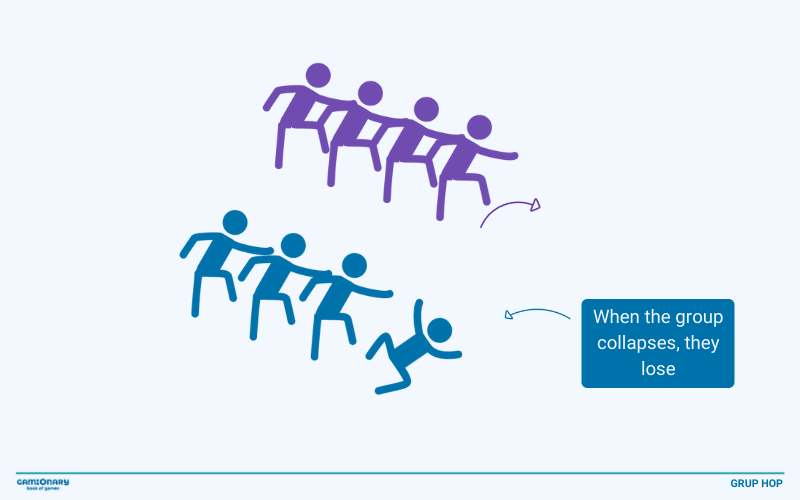
- Teams stand in rows with each member’s right hand on the arm of the person in front of them and their left leg put forward so that the person in front of them could grab them by the ankle.
Game rules
- The group checks how far they can jump together without tripping up.
- You can make a competition to check who will jump the farthest.
Goal
Full description and modifications available here: Group Hop!
- Pass the Hula Hoop
 Preparation
- Ask participants to stand in a circle.
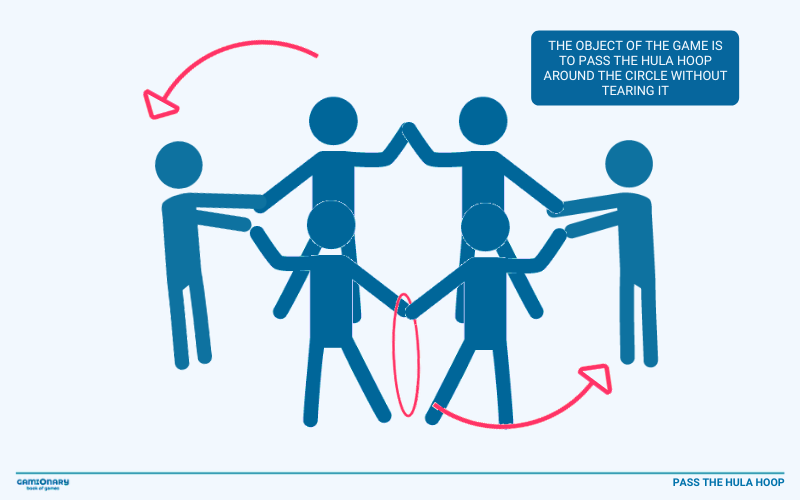
- Place the hula hoop on the arm of one of the players and instruct him/her to grab the hand of the person next to them.
- Ask everybody to hold their hands to close the circle.
Game rules
- The goal of the game is to pass the hula hoop around the circle without breaking the circle.
Goal
Full description and modifications available here: Pass the Hula Hoop
- Draw an elephant
 Preparation
- Give players the necessary utensils and tools.
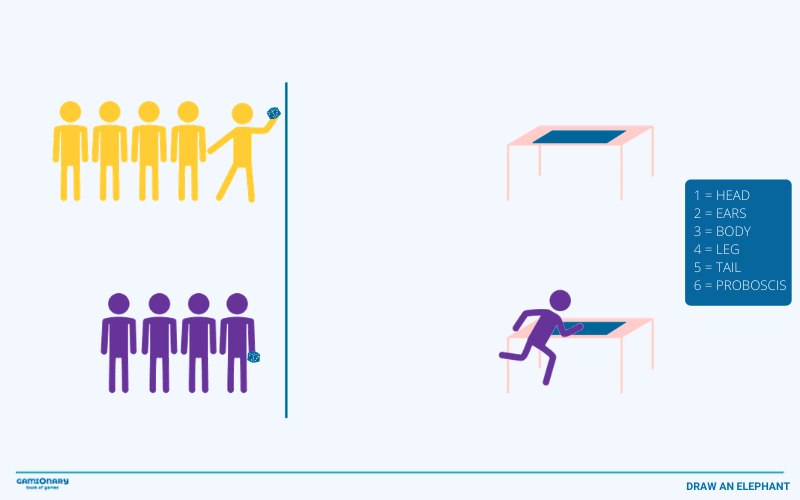
- Divide players into two teams.
- Ask the participants to stand in rows on a designated line.
- Prepare a drawing stand on the opposite side of the play field (e.g. a table with a chair, an easel with a sheet of paper pinned to it).
Game rules
- On the starting signal, the first person from each team throws a dice.
- Every number has a specific part of the elephant assigned to it: 1 – head; 2 – ears; 3 – torso; 4 – leg; 5 – tail; 6 – trunk.
- The body part that the participant is supposed to draw depends on the number on the dice.
- When he or she has finished drawing, the participant moves back to the end of the row and the next person throws the dice.
- If the dice shows a body part that has already been drawn, it must be drawn again.
- The team that is the first to draw a whole elephant wins.
Goal
- To finish the drawing as fast as possible.
Full description and modifications available here: Draw an elephant
- Foldable floor
 Preparation
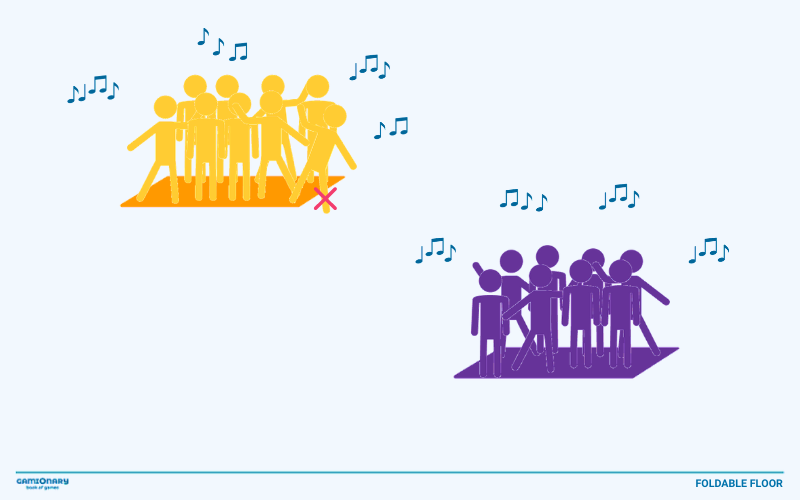
- Divide participants into teams. You can also play the game in form of individual competition.
Game rules
- The game can be played in teams or individually.
- Each group or person receives a piece of fabric of the same size; it will serve as the floor.
- Participants must fit onto the piece of fabric.
- The game is played in stages. In each next stage, the participant/group folds the fabric in half and tries to fit onto it again.
Goal
- To remain on a piece of fabric that’s been folded as many times as possible.
Full description and modifications available here: Foldable floor